Tell us about the job
Takes about a minute. No obligation.
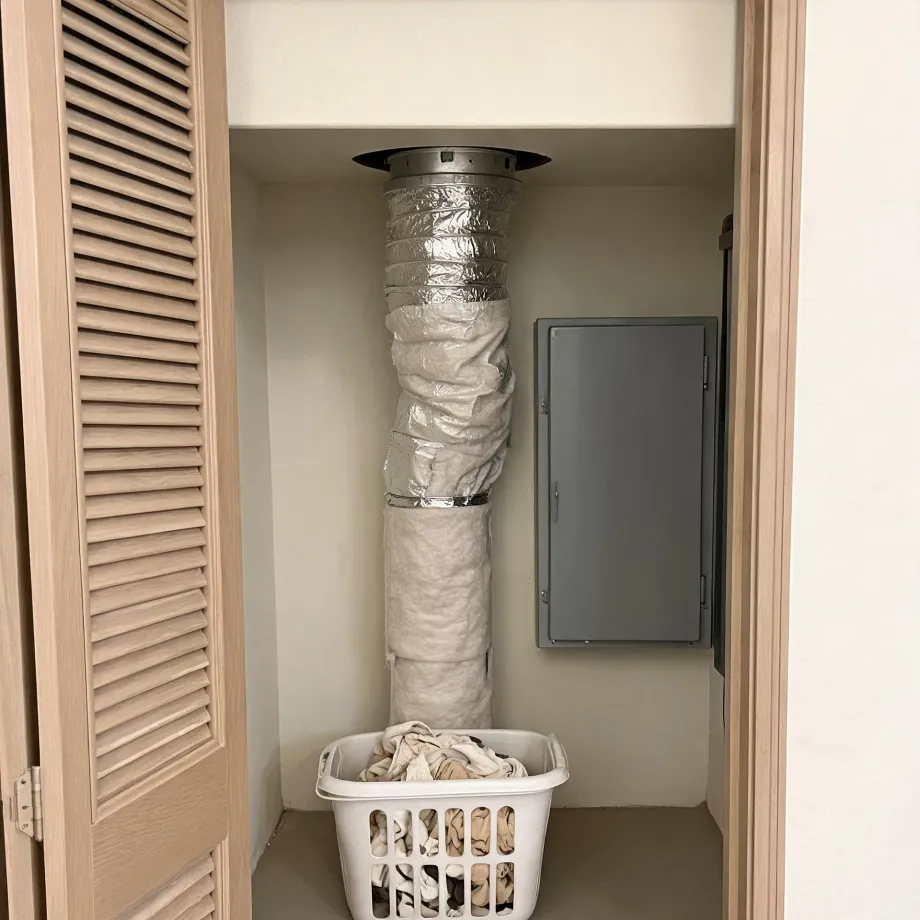
Ducting and electrical panels in much of Hawaii County's housing were put in for equipment that is no longer what runs in these homes. Half the homes in Hawaii County, Hawaii were built in 1989 or earlier (2020-2024 ACS 5-year). A heat pump draws a different load than what those panels were originally sized for, and whether the existing service can carry it is what a contractor has to settle before the equipment selection matters at all. If the panel falls short, that work gets priced and permitted on its own, separate from the unit itself.
What Gets Installed With a New Heat Pump
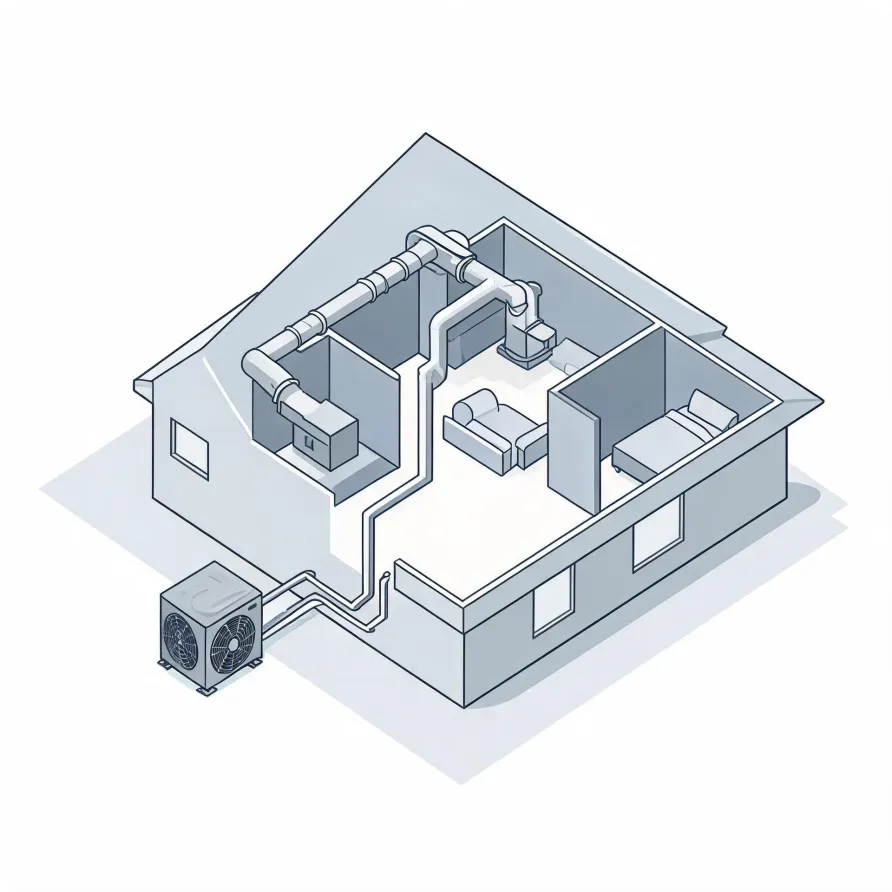
The outdoor unit is the piece a homeowner sees first. It sits on a pad outside the house and holds the compressor and the condenser coil, which do the core work of the system. Inside, an air handler mounts in a utility closet, attic, or dedicated alcove and pushes conditioned air through the home.
A refrigerant line set runs between the two units, carrying the working fluid back and forth through insulated copper tubing. A thermostat goes on an interior wall where the homeowner can reach it, and a condensate drain line runs from the air handler to a safe discharge point.
The drawing shows a general layout of these components, and a licensed contractor determines what applies to your specific house.
Find a contractor in Hawaii CountyHawaii County, by the numbers
92 severe weather events were recorded in Hawaii County, Hawaii between 2015 and 2024.
NOAA National Centers for Environmental Information, Storm Events Database, bulk CSV export, events 2015-01-01 through 2024-12-31.Half the homes in Hawaii County, Hawaii were built in 1989 or earlier (2020-2024 ACS 5-year).
U.S. Census Bureau, 2020-2024 American Community Survey 5-Year EstimatesHawaii County, Hawaii holds 90,735 housing units (2020-2024 ACS 5-year).
U.S. Census Bureau, 2020-2024 American Community Survey 5-Year EstimatesOwners occupy 74.0% of the occupied homes in Hawaii County, Hawaii (2020-2024 ACS 5-year).
U.S. Census Bureau, 2020-2024 American Community Survey 5-Year EstimatesHeat Pump Installation Rules for Hawaii County, Hawaii2 codes, standards, and licensing rules
Licensing Rules for HVAC Work in Hawaii County, Hawaii
Hawaii’s contractor licence does not reach a project whose total price for labour, materials, taxes and everything else is not more than $1,000 — but that exemption falls away whenever a building permit is required, whatever the price, and it never applies to part of a larger job.
Hawaii requires a contractor licence from the contractors license board: no person may act, assume to act, or advertise as a general engineering, general building or specialty contractor without one.
Severe Weather Events in Hawaii County
Weather puts a real load on heating and cooling equipment, and that load shapes what a heat pump needs to do year after year. Sizing and installing for Hawaii County means accounting for local conditions, which is why weather history belongs in this conversation.
92 severe weather events, 2015–2024. Source: NOAA National Centers for Environmental Information, Storm Events Database.